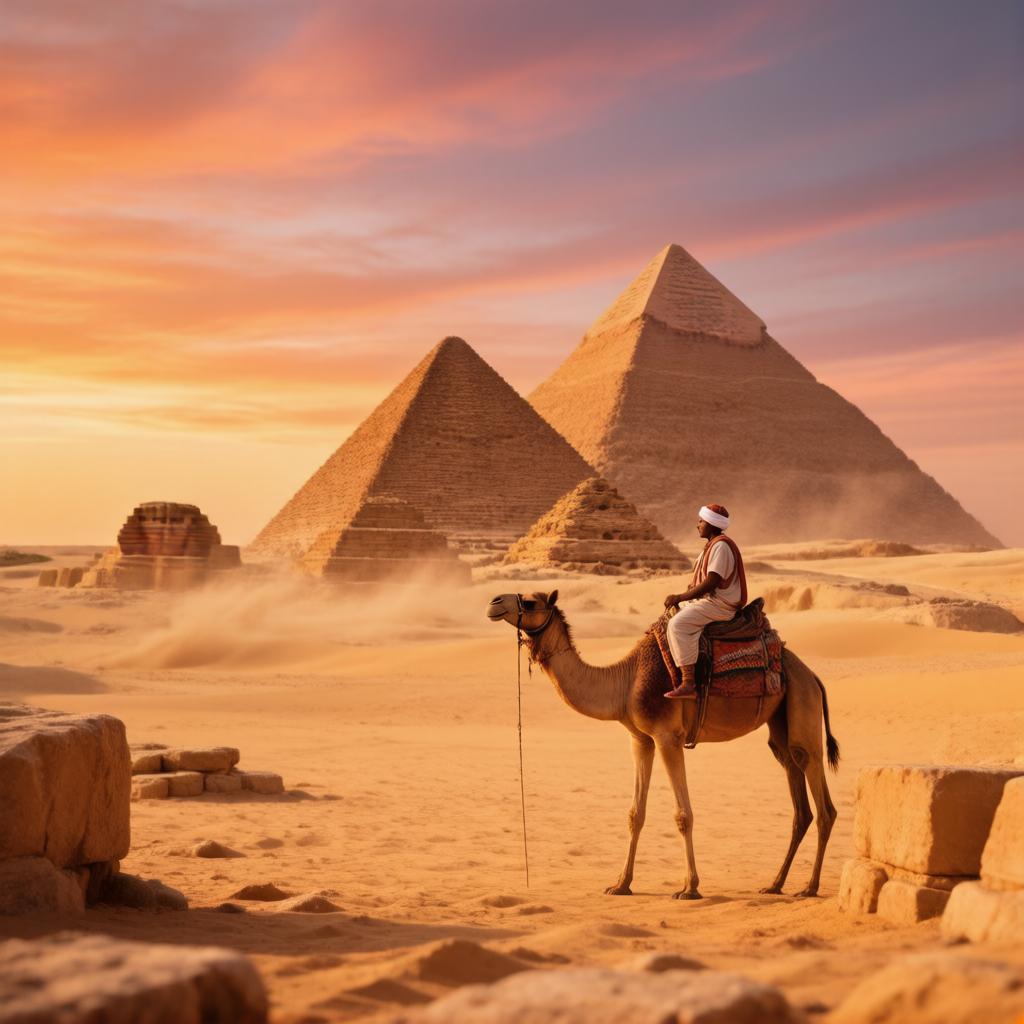
The best places to visit in Egypt include the Pyramids of Giza, the ancient temples of Luxor, the royal tombs in the Valley of the Kings, and the magnificent Abu Simbel temples. For some of the country’s most beautiful scenery, explore the Nile around Aswan, the turquoise waters of the Red Sea, the palm-filled Siwa Oasis, or the surreal white rock formations of the White Desert.
First-time visitors often focus on Cairo, Luxor, and Aswan, while travelers interested in beaches, deserts, or less crowded landscapes can explore places such as Dahab, Marsa Alam, and Fayoum. Egypt’s most memorable sights range from enormous ancient monuments to peaceful islands, colorful coral reefs, and remote desert landscapes.
Best Places to Visit in Egypt at a Glance
| Place | Region | Best for |
|---|---|---|
| Pyramids of Giza | Giza | Iconic ancient monuments |
| Grand Egyptian Museum | Giza | Ancient Egyptian artifacts |
| Historic Cairo | Cairo | Architecture and historic streets |
| Saqqara and Dahshur | Near Cairo | Early Egyptian pyramids |
| Alexandria | Mediterranean coast | Coastal city and history |
| Karnak Temple | Luxor | Monumental temple architecture |
| Luxor Temple | Luxor | Ancient Egyptian heritage |
| Valley of the Kings | Luxor | Royal tombs |
| Temple of Hatshepsut | Luxor | Dramatic desert architecture |
| Aswan | Southern Egypt | Nile scenery and islands |
| Philae Temple | Near Aswan | Island temple |
| Abu Simbel | Southern Egypt | Colossal rock-cut temples |
| Siwa Oasis | Western Desert | Salt lakes and palm groves |
| White Desert | Western Desert | Unusual desert formations |
| Fayoum and Wadi Al-Hitan | Southwest of Cairo | Desert landscapes and fossils |
| Ras Mohammed National Park | Southern Sinai | Coral reefs and coastal nature |
| Dahab | Sinai Peninsula | Relaxed coast and snorkeling |
| Marsa Alam | Red Sea coast | Marine life and beaches |
| Hurghada and Giftun Islands | Red Sea coast | Islands and turquoise water |
| Saint Catherine Area | Sinai Peninsula | Mountain scenery and heritage |
For a first trip focused on Egypt’s most famous historical attractions, Cairo, Luxor, and Aswan are strong starting points. For natural beauty, consider Siwa Oasis, the White Desert, the Red Sea coast, and the Sinai Mountains.
The official Experience Egypt tourism portal is also useful for checking destinations across the Nile Valley, Red Sea, Mediterranean coast, deserts, and oases.
20 Best Places to Visit in Egypt
1. Pyramids of Giza and the Great Sphinx
Location: Giza, near Cairo
No first list of Egypt’s most famous places would be complete without the Giza pyramid complex. The plateau contains the Great Pyramid of Khufu, the Pyramid of Khafre, and the Pyramid of Menkaure, along with the Great Sphinx.
The Great Pyramid of Khufu is especially significant because it is the only surviving wonder from the original Seven Wonders of the Ancient World.
Beyond their historical importance, the pyramids are impressive simply because of their scale. The panoramic views across the plateau also create one of Egypt’s most recognizable desert landscapes.
Giza forms part of the Memphis and its Necropolis World Heritage property listed by UNESCO.
2. Grand Egyptian Museum
Location: Giza, near the pyramids
The Grand Egyptian Museum, or GEM, is one of the most important additions to Egypt’s sightseeing landscape. Located close to the Giza pyramids, the museum focuses on ancient Egyptian civilization in a modern, large-scale setting.
As of October 2026, visitors can explore major areas including the Tutankhamun Galleries, Main Galleries, Grand Hall, Grand Stairs, and Khufu’s Boats Museum.
For travelers visiting Giza, the museum provides a natural companion to the pyramids: the archaeological sites show the monuments in their original setting, while GEM presents artifacts, royal objects, sculpture, and material culture in greater detail.
Current exhibition information is available from the Grand Egyptian Museum.
3. Historic Cairo and Khan el-Khalili
Location: Cairo
Egypt is not only about pharaonic monuments. Historic Cairo reveals another major chapter of the country’s cultural history through old streets, mosques, markets, fortifications, and Islamic architecture.
Highlights include Al-Muizz Street, Khan el-Khalili Bazaar, the Cairo Citadel, and the Mosque of Muhammad Ali.
The area is especially rewarding for travelers who want to experience dense historic streets rather than isolated archaeological sites. Architectural details, traditional commercial quarters, minarets, courtyards, and busy street life create a completely different atmosphere from Giza or Luxor.
Historic Cairo is also a UNESCO World Heritage Site.
4. Saqqara and Dahshur
Location: South of Cairo
Saqqara and Dahshur are excellent places to see how Egyptian pyramid architecture developed before and alongside the monuments at Giza.
At Saqqara, the main landmark is the Step Pyramid of Djoser, one of the most important surviving examples of early monumental stone architecture in Egypt.
At Dahshur, the Bent Pyramid and Red Pyramid show different stages in the evolution toward the smooth-sided pyramid form.
Together, the two sites give visitors a broader understanding of Egyptian pyramid building and make a worthwhile addition to a Cairo-and-Giza itinerary.
5. Alexandria
Location: Mediterranean coast
Alexandria offers a very different Egyptian experience, combining Mediterranean scenery with Greek, Roman, and later historical influences.
Major places to see include the Bibliotheca Alexandrina, the Citadel of Qaitbay, the waterfront, and several archaeological sites associated with the city’s Greco-Roman past.
The Bibliotheca Alexandrina is a modern cultural and research complex inspired by the legacy of the ancient Library of Alexandria. It is not the surviving original ancient library.
Alexandria is particularly appealing if you want to combine urban sightseeing with sea views and experience a city whose character differs markedly from Cairo and the Nile Valley.
6. Karnak Temple Complex
Location: Luxor
Karnak is one of Egypt’s most impressive ancient temple complexes and one of the main reasons Luxor belongs on a first-time itinerary.
Its most famous space is the Great Hypostyle Hall, filled with enormous columns that dwarf visitors walking between them. The complex also contains monumental pylons, statues, courtyards, obelisks, and carved reliefs.
Karnak developed over many centuries, which helps explain its enormous scale and architectural variety.
If Giza is the place to appreciate the engineering of the pyramids, Karnak is one of the best destinations for understanding the monumental scale of ancient Egyptian temple architecture.
7. Luxor Temple
Location: Luxor, East Bank of the Nile
Luxor Temple stands within the modern city, giving it a distinctive atmosphere compared with more isolated archaeological sites.
Visitors can see monumental gateways, colossal statues, columns, courtyards, and surviving reliefs. The nearby Avenue of Sphinxes historically connected the temple area with Karnak.
One of the most memorable things about Luxor Temple is the contrast between the ancient structure and the contemporary city surrounding it. It allows you to move from modern streets into a monumental ancient complex within a short distance.
8. Valley of the Kings
Location: Luxor, West Bank of the Nile
The Valley of the Kings was the burial place of many rulers of Egypt’s New Kingdom and remains one of the country’s most important archaeological destinations.
Instead of huge above-ground monuments, the main attractions here are underground tombs with corridors, burial chambers, inscriptions, and painted walls.
The Tomb of Tutankhamun is the valley’s most famous burial site, although numerous other tombs are notable for their decoration and architecture.
Not every tomb is open at the same time, and access arrangements can change. The real value of visiting is seeing ancient Egyptian funerary art within the landscape where royal burials were created.
9. Temple of Hatshepsut
Location: Deir el-Bahari, near Luxor
The Mortuary Temple of Hatshepsut is one of Egypt’s most visually striking combinations of architecture and landscape.
The temple rises in a series of broad terraces and colonnades against towering desert cliffs. Its geometric design appears almost integrated into the surrounding rock.
The setting is what makes the site particularly memorable: pale stone terraces, steep cliffs, and the open desert create one of the most dramatic architectural views around Luxor.
The temple is associated with Hatshepsut, one of ancient Egypt’s best-known female rulers.
10. Aswan and the Nile Islands
Location: Southern Egypt
Aswan is one of the most beautiful places in Egypt for Nile scenery.
Here the river winds between islands, granite rocks, green riverbanks, and desert landscapes. Traditional feluccas add to the distinctive views.
Places and experiences associated with Aswan include Elephantine Island, the Nile waterfront, nearby Nubian communities, and boat trips between the river islands.
Gharb Soheil is one of the better-known Nubian villages in the area.
Aswan is worth visiting even apart from its archaeological sites. The contrast between deep blue water, green vegetation, golden desert, and granite outcrops gives this stretch of the Nile a character unlike Cairo or Luxor.
11. Philae Temple
Location: Agilkia Island, near Aswan
Philae is one of Egypt’s most picturesque temple complexes because of its island setting.
The main monument is the Temple of Isis, surrounded by columns, courtyards, reliefs, and views across the water.
The temples were originally located elsewhere and were moved to Agilkia Island as part of an international campaign to protect Nubian monuments from rising water.
Reaching the complex involves traveling by boat, which makes the approach part of the experience. The combination of ancient architecture, rocky shores, and Nile water makes Philae especially photogenic.
12. Abu Simbel Temples
Location: Southern Egypt, near Lake Nasser
Abu Simbel is one of the most extraordinary ancient sites in Egypt.
The Great Temple of Ramesses II is fronted by four colossal seated statues carved into the rock. Nearby stands the smaller Temple of Hathor and Nefertari.
Inside, visitors can see halls, columns, and carved reliefs, while the exterior remains one of the most recognizable monumental façades in Egypt.
The temples were relocated in the 20th century to protect them from flooding associated with the creation of Lake Nasser.
Abu Simbel lies far south of Aswan, so it normally requires dedicated travel time rather than being treated as a quick stop within the city itself.
13. Siwa Oasis
Location: Western Desert
Siwa is one of the most distinctive natural destinations in Egypt.
The oasis combines palm groves, desert scenery, salt lakes, springs, mud-brick architecture, and the immense dunes of the Great Sand Sea.
Popular sights include the Siwa Salt Lakes, the ruins of Shali Fortress, natural springs, and surrounding palm-covered landscapes.
The contrast is striking: brilliant blue or turquoise water can sit beside white salt crusts, green palms, and expanses of sand.
Siwa is far from the main Cairo–Luxor–Aswan route, so it requires separate planning. That remoteness is also part of what makes it feel so different from Egypt’s busiest sightseeing areas.
14. White Desert National Park
Location: Western Desert, near Farafra and Bahariya
The White Desert looks unlike almost any other landscape in Egypt.
Its defining features are pale limestone formations sculpted by natural erosion into shapes that resemble mushrooms, towers, animals, or abstract sculptures.
Against the open desert, the white formations can create an almost surreal landscape.
Nearby desert itineraries may also incorporate the Black Desert and Crystal Mountain, although these are separate attractions.
Travel conditions and access arrangements in parts of the Western Desert can change, so remote excursions require more planning than visits to major urban attractions.
15. Fayoum and Wadi Al-Hitan
Location: Southwest of Cairo
Fayoum combines desert, lakes, dunes, geological features, and paleontological sites within a region that feels very different from the monumental landscapes of Giza and Luxor.
Wadi Al-Hitan, or Whale Valley, is especially important. The UNESCO-listed site contains fossil remains that document the evolution of ancient whales.
Nearby, Wadi El Rayan adds lakes, desert scenery, dunes, and waterfalls to the region’s natural attractions.
Wadi Al-Hitan is not a place to see living whales. Its importance comes from prehistoric fossils preserved within an unusual desert setting.
16. Ras Mohammed National Park
Location: Southern Sinai, near Sharm El-Sheikh
Ras Mohammed showcases the natural side of the Red Sea.
The park is known for clear coastal waters, coral reefs, marine biodiversity, and the contrast between desert terrain and intensely blue sea.
Although diving and snorkeling are major attractions, the appeal goes beyond underwater activities. Coastal viewpoints and the meeting of desert and sea make the area visually distinctive.
For travelers who want to include nature alongside Egypt’s archaeological sites, Ras Mohammed provides a dramatic change of scenery from the Nile Valley.
17. Dahab
Location: Sinai Peninsula
Dahab combines the Red Sea with the rugged mountains of Sinai.
The town is known for its relaxed waterfront atmosphere, snorkeling and diving areas, and views across the Gulf of Aqaba.
The Blue Hole area is one of its best-known natural landmarks, although it is primarily famous within the diving world and should not be treated as an activity suitable for everyone.
Dahab’s biggest visual appeal comes from the combination of clear water, arid mountains, and a less urbanized coastal atmosphere than Egypt’s larger resort centers.
18. Marsa Alam
Location: Southern Red Sea coast
Marsa Alam is a strong choice for travelers interested in beaches, reefs, marine scenery, and protected coastal landscapes.
The Abu Dabbab area is well known for its clear water and marine life, while Wadi El Gemal National Park adds desert, coastline, islands, and natural habitats.
Sea turtles and other wildlife may be encountered in the region, although sightings can never be guaranteed.
Marsa Alam works particularly well for travelers who want the Red Sea to be a major part of the trip rather than simply adding a short beach stop.
19. Hurghada and the Giftun Islands
Location: Red Sea coast
Hurghada is one of Egypt’s main Red Sea resort centers, but the most scenic attractions are often found offshore.
The Giftun Islands are known for sandy beaches, turquoise water, reefs, and open sea views. Boat trips from Hurghada make it possible to experience a very different landscape from the country’s desert and archaeological destinations.
The area is a good choice if you want to combine a beach stay with marine excursions while still having access to a major tourism hub.
Access to particular islands and beaches can depend on protected-area rules and excursion arrangements.
20. Saint Catherine and the Sinai Mountains
Location: Sinai Peninsula
The Saint Catherine area reveals a mountainous side of Egypt that many first-time visitors do not expect.
Major landmarks include Saint Catherine’s Monastery, Mount Sinai or Jebel Musa, and the surrounding rugged granite mountains.
The region combines dramatic scenery with deep religious and cultural significance. It is also recognized as a UNESCO World Heritage Site.
Mount Sinai and Mount Saint Catherine are two different mountains, even though both are associated with the same broader region.
For travelers interested in landscapes rather than beaches or temples, Sinai’s high mountains provide one of Egypt’s most distinctive natural environments.
What Are the Most Beautiful Natural Places in Egypt?
Egypt’s natural beauty extends far beyond the Nile Valley. Travelers can find salt lakes, remote oases, sculpted limestone formations, colorful reefs, and dramatic mountain landscapes.
| Natural destination | Main attraction |
|---|---|
| Siwa Oasis | Salt lakes, palm groves, desert scenery |
| White Desert | Surreal white limestone formations |
| Wadi Al-Hitan | Desert landscapes and prehistoric fossils |
| Aswan | Nile islands and contrasting river scenery |
| Ras Mohammed | Coral reefs and coastal landscapes |
| Marsa Alam | Beaches, reefs, and marine life |
| Sinai Mountains | Rugged peaks and mountain views |
Siwa and the White Desert stand out for travelers drawn to remote desert scenery, while Aswan offers one of the most attractive stretches of the Nile. For coastal landscapes, Ras Mohammed and Marsa Alam provide some of the clearest examples of Egypt’s Red Sea environment.
Which Places in Egypt Should First-Time Visitors See?
If this is your first trip, a classic historical route usually centers on Cairo and Giza, Luxor, and Aswan.
Cairo and Giza provide the Pyramids, Great Sphinx, Grand Egyptian Museum, Historic Cairo, and easy access to Saqqara.
Luxor concentrates an extraordinary number of ancient sites in one area, including Karnak, Luxor Temple, the Valley of the Kings, and Hatshepsut’s temple.
Aswan combines archaeological sites with some of Egypt’s best Nile scenery and provides a practical base for adding Philae and a separate trip to Abu Simbel.
If you have more time, add either the Red Sea for coastal scenery or one of the Western Desert destinations for a very different side of Egypt.
Egypt’s major attractions are spread across different regions, so choosing a few areas is usually more practical than trying to visit every destination at once.
Where to Go in Egypt Based on Your Interests
Best Egypt Destinations by Travel Style
| Travel interest | Places to consider |
|---|---|
| Ancient Egyptian history | Giza, Luxor, Abu Simbel |
| Museums | Grand Egyptian Museum, Cairo |
| Historic cities | Cairo, Alexandria |
| Beautiful desert scenery | White Desert, Siwa Oasis |
| Nile landscapes | Aswan, Luxor |
| Beaches and islands | Hurghada, Giftun Islands, Marsa Alam |
| Snorkeling and coral reefs | Ras Mohammed, Dahab, Marsa Alam |
| Less conventional sightseeing | Fayoum, Siwa, Saqqara |
| Mountain scenery | Saint Catherine Area |
History lovers will generally get the most from Giza, Luxor, and Abu Simbel. For nature, Siwa, the White Desert, and Fayoum offer landscapes that look completely different from the Nile Valley. Travelers prioritizing beaches and marine scenery can focus on Hurghada, Marsa Alam, Dahab, or southern Sinai.
How Many Places Can You Visit in Egypt in One Trip?
How much you can realistically see depends on the length of the trip and how much time you want to spend traveling between regions.
Short Trip
For a short visit, concentrating on one area is usually more practical.
Cairo and Giza alone can include:
- Pyramids of Giza;
- Grand Egyptian Museum;
- Historic Cairo;
- Saqqara and Dahshur.
Trying to add Siwa, Abu Simbel, and the Red Sea to the same very short trip would involve substantial additional travel.
One-Week Trip
With around a week, many first-time travelers concentrate on a combination such as:
- Cairo and Giza;
- Luxor;
- Aswan.
How much you can comfortably fit in depends on transportation choices and the pace of sightseeing.
Longer Trip
A longer itinerary makes it easier to add destinations such as:
- Alexandria;
- the Red Sea;
- Fayoum;
- White Desert;
- Siwa Oasis.
Remote desert destinations generally require more dedicated logistics than major cities along the Nile.
When Is the Best Time to Visit Egypt’s Top Attractions?
There is no single season that is equally ideal for every region of Egypt.
Cairo, Luxor, and Aswan
Many travelers prefer cooler months for archaeological sightseeing, particularly in southern Egypt, where summer temperatures can be intense.
Red Sea Coast
Red Sea destinations receive visitors through much of the year, although weather and sea conditions vary by season and location.
Western Desert
Desert trips are affected by large temperature changes between seasons and between day and night. Access arrangements for remote areas can also vary.
The best season depends on whether your priority is ancient sightseeing, desert landscapes, or the Red Sea coast.
Egypt’s best places to visit go far beyond its famous pyramids. From the ancient temples of Luxor and the monumental statues of Abu Simbel to the peaceful Nile islands of Aswan, the salt lakes of Siwa Oasis, and the extraordinary landscapes of the White Desert, the country offers an incredible range of sights. First-time visitors can start with Cairo, Luxor, and Aswan, while those looking for natural beauty can explore the Red Sea coast, remote oases, and desert landscapes. The best places to see ultimately depend on whether you’re most interested in ancient history, scenery, beaches, or a combination of all three.