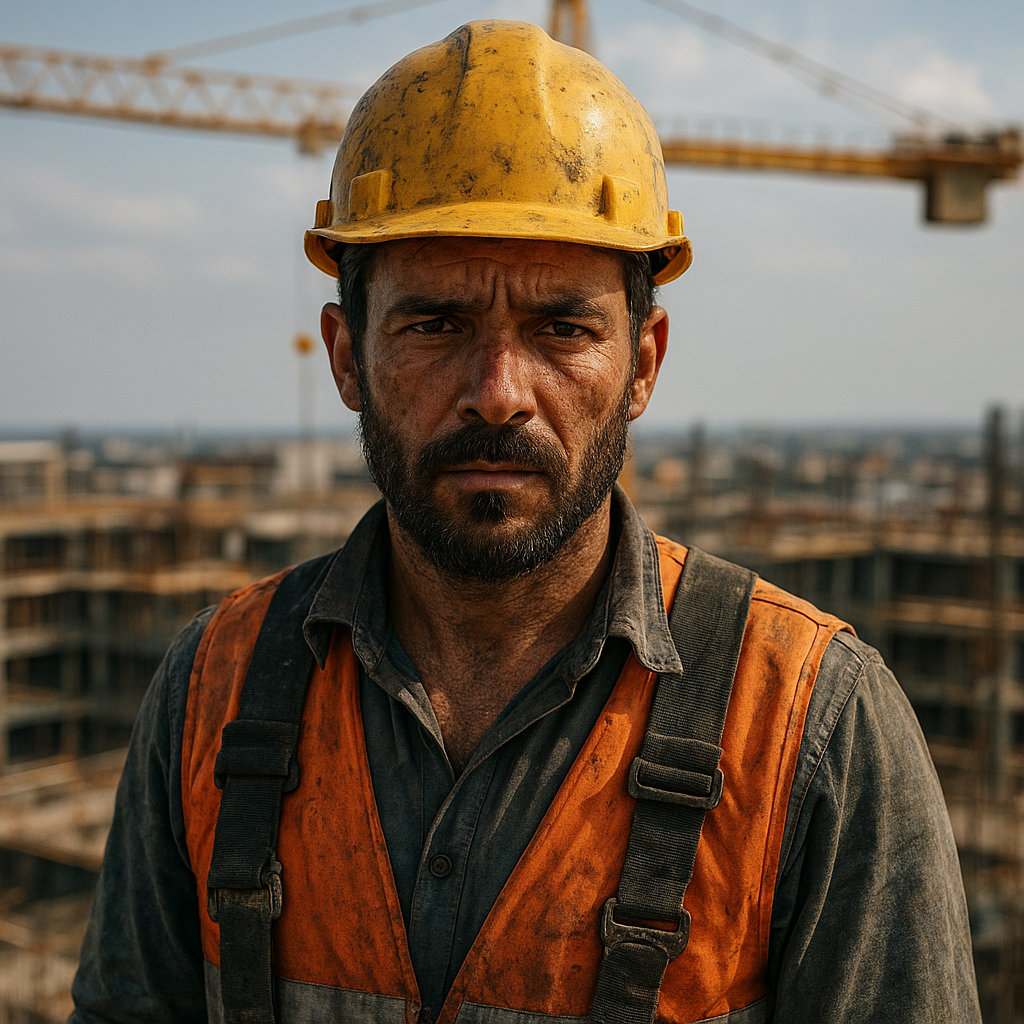
Top 10 most dangerous jobs in the world
As a guy who has spent years tracking labor statistics and talking to crews on the ground, I can tell you the numbers never lie. The data shows a clear shift from the early industrial era, where safety gear was practically a myth, to the highly regulated environments we see today. Still, certain roles demand a level of risk that most of us would never accept. Understanding why these positions remain on the radar is not just about morbid curiosity. It is about recognizing how occupational health policies, engineering controls, and real-world conditions intersect.
Top 10 deadliest jobs in the world
Looking at the fatality rates per 100,000 full-time workers, a distinct pattern emerges. The ranking does not just measure how often injuries happen. It measures irreversible outcomes. Historically, logging, commercial fishing, and structural ironwork dominated the charts. Over the past three decades, we have seen a steady decline in raw death counts due to stricter enforcement and better machinery, but the relative risk ratio remains stubbornly high for a specific set of industries. The gap between corporate boardrooms and frontline crews is exactly why these metrics matter.
- Logging and forestry operations face unpredictable terrain and heavy falling timber.
- Commercial fishing deals with extreme weather, vessel instability, and drowning hazards.
- Roofing involves falls from significant heights without adequate fall arrest systems.
- Structural iron and steel work requires balancing at great elevations while handling heavy components.
What are the most dangerous jobs in the world
To answer this properly, you need to separate perception from statistical reality. Media coverage often highlights dramatic rescue scenarios or rare industrial explosions, but the actual data tracks chronic exposure and acute trauma. We measure danger using standardized metrics like the fatal injury rate and nonfatal incident frequency. When regulators talk about high-risk sectors, they focus on environments where mechanical failure, environmental volatility, or human error can cascade quickly. The terminology itself has evolved. Decades ago, we simply called them hazardous trades. Today, occupational epidemiologists classify them by hazard type: physical, chemical, ergonomic, and psychosocial.
| Industry Sector | Primary Risk Factor | Historical Trend |
|---|---|---|
| Agricultural and Forestry | Heavy equipment and environmental exposure | Gradual decline due to mechanization |
| Transportation and Warehousing | Vehicle collisions and fatigue | Fluctuating with economic demand |
| Construction and Extraction | Falls, electrocution, struck-by incidents | Steady improvement with compliance standards |
What are the 10 most dangerous jobs
The list changes slightly depending on the region and the reporting agency, but the core roles remain consistent. In the United States and European Union, labor departments publish annual summaries that highlight the same sectors year after year. You will notice that delivery drivers, refuse collectors, and pilots actually rank higher than many people expect. It is not about glamour. It is about exposure frequency and traffic patterns. When a driver spends eight hours navigating congested highways or rural backroads, the probability of a severe collision compounds. The same logic applies to waste management crews who work alongside moving traffic in all weather conditions.
One thing I have noticed while reviewing these reports is the silent impact of chronic stress and fatigue on decision-making. Sleep deprivation does not show up in fatality charts as a primary cause, but it is a massive multiplier in accident rates across all high-risk feilds.
Most dangerous professions in the world
Tracking the evolution of workplace safety reveals a fascinating trajectory. In the early twentieth century, industrial accidents were considered an acceptable cost of production. There were no mandatory harnesses, no real-time gas monitoring, and very little accountability. Fast forward to the 2020s, and we have predictive anayltics, automated safety locks, and rigorous certification programs. The transformation did not happen overnight. It took decades of union advocacy, engineering breakthroughs, and regulatory frameworks to shift the paradigm. Yet, despite all the progress, certain roles still sit at the top of the risk spectrum because the environment itself cannot be fully engineered away.
Safety protocols are only as effective as the culture that enforces them. No amount of gear replaces proper training and situational awareness.
If you want to dive into the raw datasets, the Bureau of Labor Statistics publishes comprehensive occupational fatality reports that break down every sector. You can check their latest publications at https://www.bls.gov/iif/oshwc-cfoi.htm. For a broader European perspective, Eurostat maintains similar workplace accident databases, accessible at https://ec.europa.eu/eurostat/web/lfs/accidents. By the time the 2026 reporting cycles finalize, we will see how automation and updated safety mandates reshape these numbers.
The reality of these roles is not going to vanish anytime soon. Automation will handle more of the repetitive and lethal tasks, but human oversight, maintenance, and emergency response will always require boots on the ground. Understanding the mechanics behind these statistics helps companies design better training, helps workers demand proper equipement, and helps the public respect the invisible labor that keeps modern society running. The numbers tell a story of risk, resilience, and the ongoing push to make every shift a little safer than the last.